
Yes, San Sebastián has the string lights and Christmas market too. But underneath it, there’s a Christmas that’s not bright red and has nothing to do with Santa Claus, and everything to do with Olentzero, a coal worker who lives in the mountains, and delicious food.
If you’re planning a trip to the Basque Country in December, here’s what’s happening in San Sebastian, and where to taste the best bites.
Olentzero, Not Santa Claus
Basque children don’t wait for a man in a red suit from the North Pole. They wait for Olentzero — a charcoal maker, covered in soot, who walks down from the mountains on the night of December 24th to bring gifts. He’s older than Christianity itself: the figure is tied to the winter solstice, to the moment the days start getting longer again, long before anyone in the Basque Country had heard of Christmas.
On the 24th, Olentzero parades through the Old Town with crowds of children, txistu* players (a Basque wind instrument), and giant puppets. It’s not a performance for tourists — it’s a tradition that the e city has kept alivefor itself.
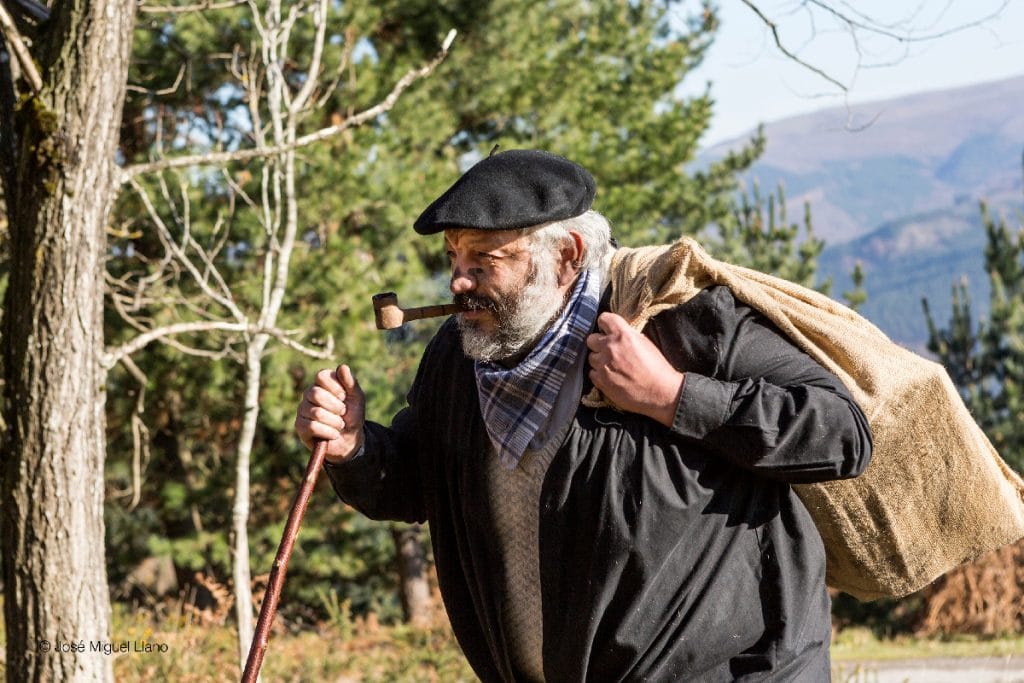
Foto: Aiaraldea Gaur eta Hemen / Flickr
Two Christmases, Not One
Here, the holiday season carries onto January.doesn’t end on the 25th. On the night of January 5th, the Cabalgata de los Reyes Magos (the Three Wise Kings parade) takes over the streets. — Thethe Three Kings arrivearriving by boat, or on horseback or carriage, depending on the year, with sweets they throwrown to the crowd.
The next morning, families eat roscón de reyes, a ring-shaped sweet and soft brioche with sweet dried fruit and a sweet crust. Some of them are filled with whipped or clotted cream. A must eat during the season. Inside each roscón a hidesden a figurine and a hidden bean baked inside: find the figurine, you’re king for the day; find the bean, you’re paying for next year’s roscón.
Olentzero belongs to Basque folklore. The Reyes Magos belong to Catholic tradition, celebrated across Spain. Most families here keep both — which is why, in Donostia (San Sebastian), the Holiday seasonChristmas doesn’t really end until January 6th.
What’s Actually on a Basque Christmas Table
Forget the turkey and main idea of a single “Christmas dish.menu.” Basque winter food combines both surf and turf.follows the mountains and the sea.
A tradtional entree is Idiazabal cheese is made with raw milk from Latxa sheep — a native Basque breed raised in the hills — and winter is when the cheese cured months earlier finally hits its peak. Usually a nice platter of cured, high-quality jamón, nice crusty bread, maybe some white asparagus with home made mayoinnaise and grilled prawns with a generous drizzle of olive oil and salt crystals.
Turrón isn’t originally Basque (it comes from Arab-Andalusí confectionery around Alicante), but it’s been fully adopted into the Basque Christmas table anyway. A local delicacy is also Kokotxas, — the throat/chin part of hake or cod, which — used to be what fishermen threw away.; Ttoday they’re one of the most sought-after bites in Basque cooking, a good example of how something humble becomes a delicacy. And foie gras, or foie micuit less expected here than in France, shows up on Basque Christmas Eve tables thanks to the region’s proximity to Les Landes, just across the border in the French Basque Country. It’s served with a dark cherry jam and toast.
For dessert, Turrón is always on the tables. It isn’t originally Basque (it comes from Arab-Andalusí confectionery around Alicante), but it’s been fully adopted into the Basque Christmas table anyway. You have the soft ground almond one and the caramelized whole almond, sugar and wafer one. They’re like a big slice of nougat. Nowadays local bakers have also started creating modern versions of it with all sortd of layers and sweet ingredients.
At home, some families also cook caracoles en salsa (snails in a slow-simmered slightly spicyspiced sauce) and intxaur saltsa, a walnut cream dessert served in Basque homes since the 19th century. — Ssimple, warm, and the kind of dish that’s dissappeared from restaurant menus but lives on thing nobody puts on a restaurant menu because it belongs at a family tables. , not a tourist one.
Christmas in San Sebastián
San Sebastián’s Christmas celebrations run from 28 November to 6 January, with festive lights, markets, music and family activities across the city.
Christmas Lights & Opening Celebration
28 November, 7:30 pm – City Hall
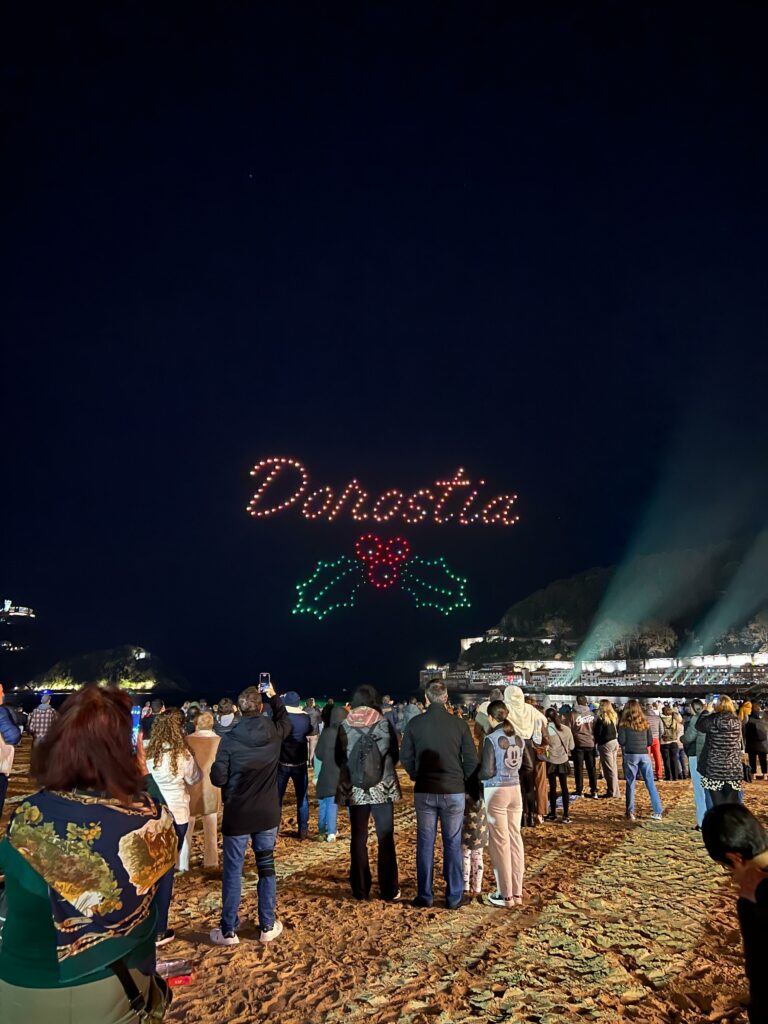
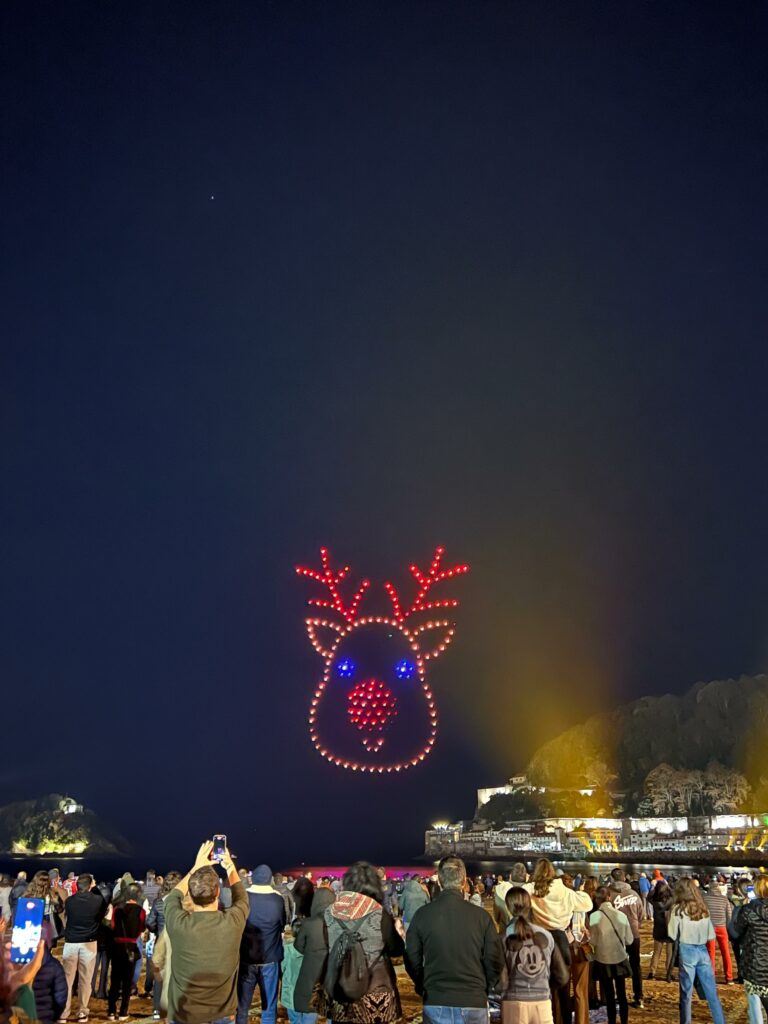
The Christmas season officially kicks off with a performance, followed by Donostia Ametsetan, a spectacular 500-drone show. The Christmas lights will be switched on afterwards.
Miramar Magikoa
4 December–5 January | 6:00–10:00 pm | Miramar Palace
A 700-metre immersive light experience inspired by insects, biodiversity and nature. A great family-friendly activity combining art, technology and sustainability. Tickets required.
Christmas Lights
28 November–6 January | Throughout the city
More than 500 illuminated decorations will light up San Sebastián, including the Christmas tree and illuminated forest at Alderdi Eder, the decorated streets of the Old Town and the spectacular walk-through Christmas bauble at Zurriola, with light and sound shows from 5:45–11:00 pm.
Christmas Market
From 4 December | Paseo de Francia & Plaza Ramón Labayen
The Christmas market will feature 71 stalls selling local food, crafts, gifts and Christmas decorations. Plaza Ramón Labayen will also host a dedicated food market featuring local products.
Ferris Wheel
Until 31 January | Alderdi Eder
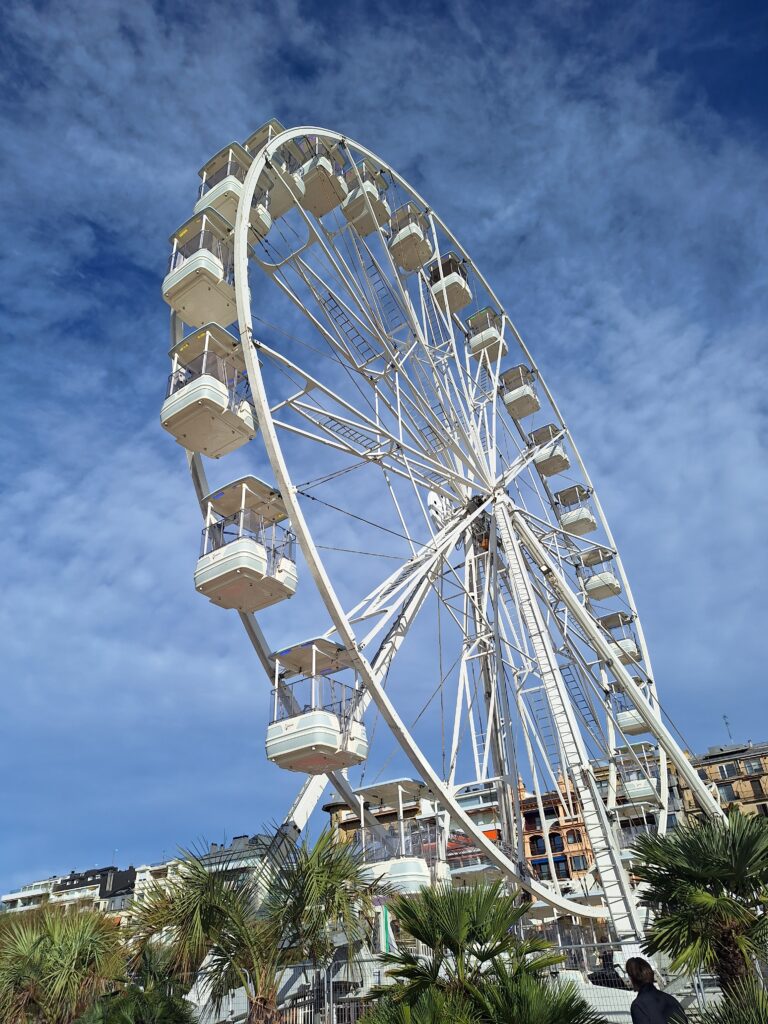
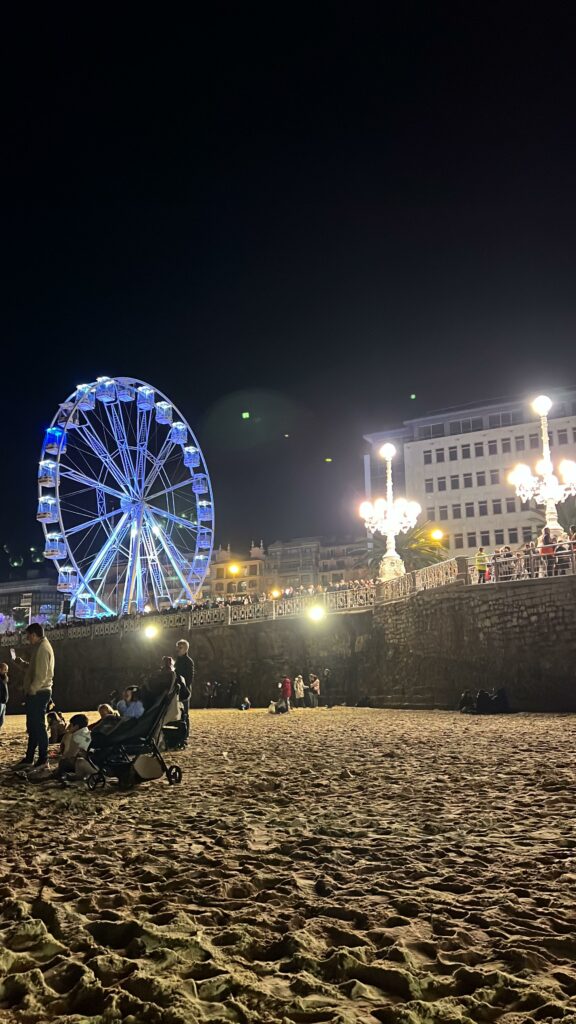
A 32-metre-high Ferris wheel overlooking La Concha, with 24 cabins, will be open throughout the Christmas season.
Ice Skating
From 28 November | Paseo de Francia
A 10 × 30 metre natural-ice rink will offer public skating throughout the Christmas period, with extended opening hours from 19 December.
Christmas Music
20–28 December | Boulevard & Plaza Ramón Labayen
Musika Gabonetan will showcase young local musicians, alongside free concerts by the Orfeón Donostiarra in different neighbourhoods.
Christmas at La Concha Beach
23 December, 10:30 am–1:00 pm | La Concha
A free morning of sports and family activities for children, combining fun, environmental awareness and inclusion.
And if you’re staying past January 20th, you’ll catch the tail end of the city’s real Christmas season: Tamborrada, 24 hours of drumming through the Old Town that marks the actual close of the holidays here and one of the best days to be in San Sebastian.
The Best Way to Taste Christmas
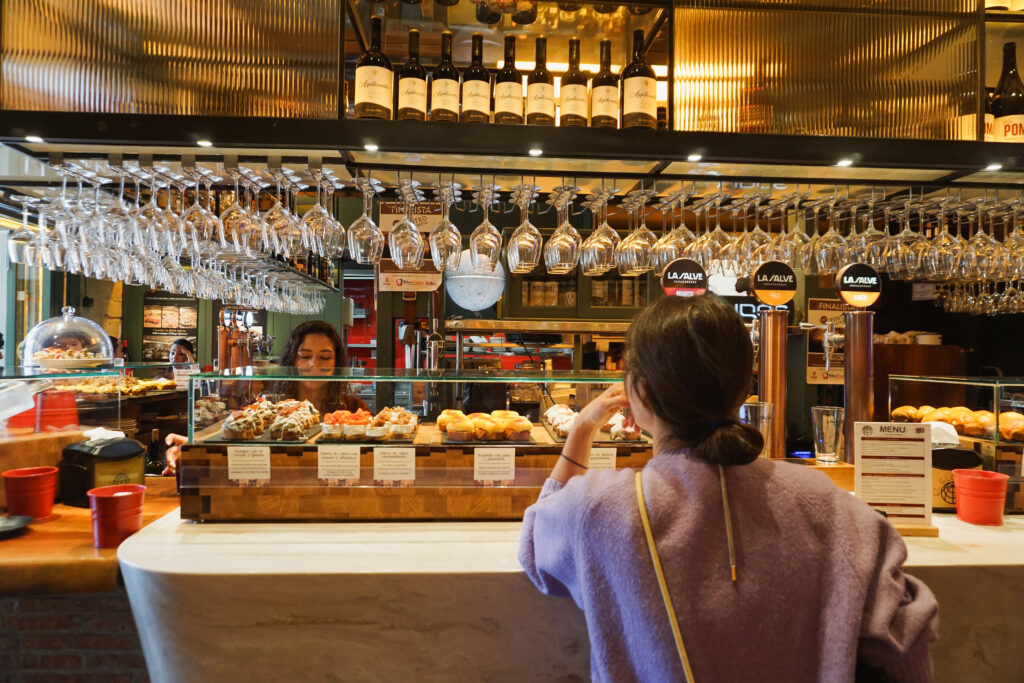
Our Christmas Food Tour, is a limited-edition, 3-hour food tourwalk — running only from December 4th to January 6th. Visit two neighbourhoods and start atFrom — through the riverside Christmas Market, walk through Plaza Gipuzkoa, and finish in thethe Old Town. Along the way, you’ll taste Idiazabal cheese, txakoli wine, seasonal pintxos at two of our favourite pintxo bars, taste soft almond turrón, and sweet roscón de reyes Brioche at the oldest bakery in town you’ll taste: Idiazabal cheese, txakoli wine, pintxos at Casa Urola and Borda Berri, turrón, and roscón de reyes at Otaegi, a pastry shop that’s been which has been on the same street in San Sebastián since 1886.
Small groups, English-speaking local guide, and — like every Topa tour, — every guest funds a meal donated through Zaporeak. A local initiative that helps feed wholesome meals to refugees.
Because the way we see it, the point of traveling somewhere in December isn’t to find the Christmas market that looks like every other Christmas market. It’s to understand why a city celebrates the way it does, — and San Sebastian is unique in how it celebrates this season. The way we see it, is that traveling is also a chance for you to leave the places you visit a little better than how you found them. That’s why each tour is linked to an association that helps create a positive social impact. Transform travel and be transformed by travel.